


We spoke with Paul Aitink, a Hearing Care Professional at Hoorpartners in Wezep, who took the step three years ago to offer Dry Ear Canal Cleaning (DECC) in his store. What struck us: Paul does not talk about earwax removal as an “extra” alongside his main activity, but as something that has broadened his entire craftsmanship — and that now draws customers from Zwolle and Deventer to Wezep.
The decision to remove earwax
For Paul, the decision was simple, despite all the hesitation that still persists in the industry: “If it doesn’t help, it doesn’t hurt.” While many fellow Hearing Care Professionals are still hesitant, Paul saw it primarily as an opportunity to offer immediate added value. “You can quickly relieve a client of an annoying problem. It’s a wonderful service that’s greatly appreciated and gets passed along by word of mouth, and you can often move right on to the rest of the appointment or have a chance to sell a hearing aid.”
That immediacy—no waiting times like at the doctor’s office, no more referrals, an immediate solution, and a happy customer right away—was, in his view, the key that too many colleagues are still overlooking. You become a better Hearing Care Professional if you remove earwax within the EarwaxShop Quality Framework, thanks to the continuous knowledge transfer from the ENT doctor via the Earcare Dossier.
Safety: Alsoka Medical offers the combination that makes earwax removal by the Hearing Care Professional safe
For ENT doctors and general practitioners observing from a distance, safety is often the primary concern. Paul is very specific about this: the combination that Alsoka Medical offers—the Vorotek O Scope head-worn microscope, thorough training, and continuous coaching and supervision from the ENT doctor via the EarcareDossier—is exactly what makes his daily practice safe and responsible. “It is safe because of the equipment we use, the training we have received, and the ENT doctor who provides remote support.”
What is perhaps most convincing about Paul is that he shares his doubts out loud and dares to express them to his customers. “We never just tell the customer something. We ask: would you mind if I consult the ENT doctor about your ear canal?” That sentence—asking for permission instead of drawing a conclusion himself—is exactly where the boundary of his expertise ends and that of the ENT doctor begins, and he visibly guards that boundary.
Triage: the Hearing Care Professional as gatekeeper
Paul proves that this caution is not just a formality with a story that has clearly stayed with him. Behind a customer’s earwax, there turned out to be a cholesteatoma—recognized early and immediately referred to the ENT doctor. Without the head-worn microscope and the supervision, it probably would have been discovered much later. “Most ears are normal. You’re just like a goalkeeper—you have to pick out that one shot.”
It is an image that hits the core of what the role of the Hearing Care Professional has become: not just removing earwax, but observing, identifying, and passing it on in time. “The role of the Hearing Care Professional as a gatekeeper is becoming increasingly important. We can now see better—with the head-worn microscope—than the general practitioner.” And that observation improves over time: “Through the continuous knowledge transfer with the ENT doctor, we are becoming better at recognizing images and eardrums.”
Local collaboration with GP and ENT doctor
The suspicion that initially existed among general practitioners and ENT doctors around Wezep has now turned into structural referrals. General practitioners now actively refer patients to Hoorpartners—a trust that, according to Paul, does not arise naturally but is earned by working consistently, visibly, and responsibly.
His message to skeptical doctors is therefore an open invitation: “I invite any general practitioner or ENT specialist who has reservations about audiologists removing earwax within the EarwaxShop Quality Framework to come see how we do it.”
The business case for the hearing center
In terms of figures, the picture is clear for Paul: a significant increase compared to last year, including among his own existing customers, with a clear peak towards the summer—festivals, swimming, holidays, flying. New customers now come purely for earwax and sometimes from far away: from Zwolle, Deventer, and the surrounding areas, because Hoorpartners is available every day and can help within a maximum of three days.
“We don’t really keep an eye on the clock and sometimes work a little longer at the end of the day. Earwax is an urgent problem—people don’t call for no reason.” In practice, Paul schedules treatments strategically: at times when there are no hearing aid appointments on the calendar, often toward the end of the day. “That way, I can help right away.”
Synergy with the core business—selling hearing aids
What earwax removal means for his core activity as a Hearing Care Professional—fitting and selling hearing aids—Paul demonstrates with an example from daily practice at Hoorpartners: “Helma—my colleague and partner—does an intake, starts testing, the ear is blocked—then she knocks on my door. I clean it and Helma takes the customer back, or the customer waits for a moment.” That flexibility between colleagues is exactly why it hasn’t become a separate trick, but part of how the store works.
Sometimes an earwax customer turns out to be in the target group for a hearing aid; sometimes there is no earwax at all and testing begins immediately. “They see that we can offer the whole package: cleaning, measuring, one-stop-shop.” And earwax customers return regularly—Paul advises preventive dropping with EarwaxShop ear drops and estimates that he sees them back about once every six months, sometimes more often—where not every visit automatically means a new hearing aid check, but the relationship remains intact.
The customer experience of earwax removal: immediate happy customers
The contrast with the old route—syringing at the general practitioner, or waiting months for an ENT appointment—is very palpable for customers, according to Paul. “I haven’t had a customer yet who found the suctioning unpleasant. In fact, most people find it pleasant—if you explain it well beforehand.”
What stays with him most is the reaction to the before and after videos: “Most people see their own ear canal and eardrum for the first time. And they love it.” A hearing aid process normally takes a month: a week for delivery, three weeks for adjustments. With earwax, the customer is helped immediately—and is happy right away.
To the hesitant colleague: It makes you a better Hearing Care Professional
For Hearing Care Professionals who are still hesitating because the threshold feels high, Paul has some honest advice: look closely at your own store and location, but then actually take the step. “It makes you a better Hearing Care Professional, it’s more fun to do, and it is appreciated.”
“But you really have to do it: put in the kilometers right after your training.” His own learning curve—getting the hang of it, getting some exposure, and then noticing that people naturally start talking about it with family and friends—is exactly the pattern he holds up as an example for others.
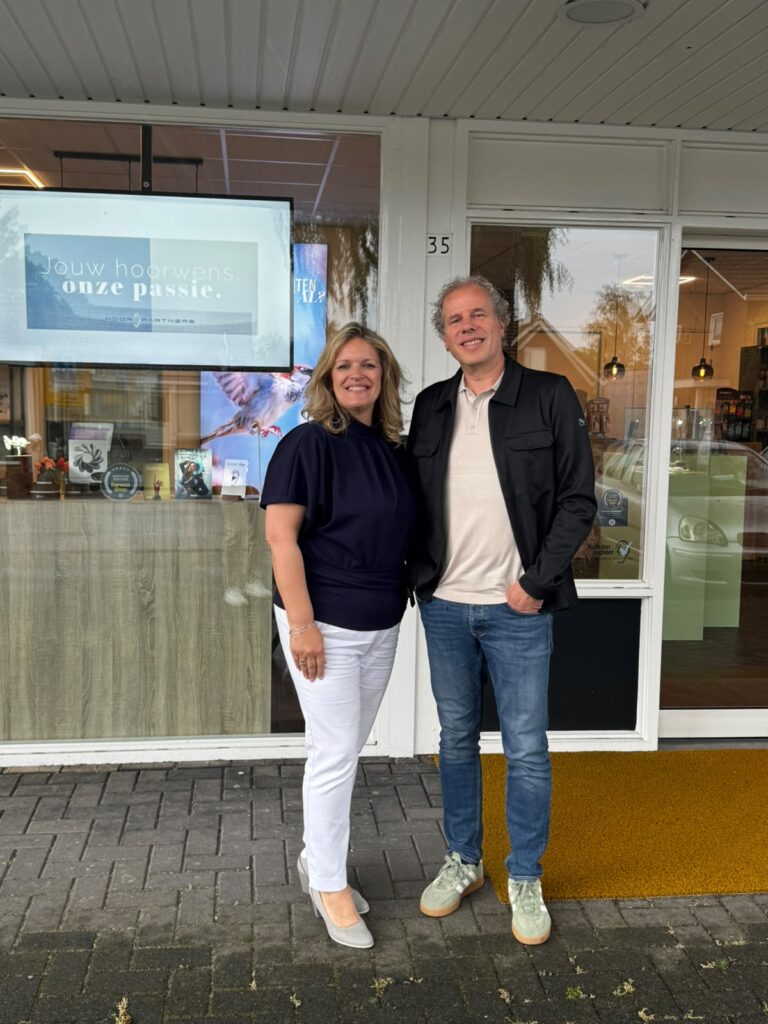
The Bigger Picture: Helping My Clients Is My Top Priority
Looking back on the past three years, Paul has seen his professional skills expand: more knowledge, more experience, satisfied customers, and a tangible contribution to reducing wait times in ear care.
“Helping customers is our top priority. We offer a comprehensive package. And customers talk about it.”
And about people’s willingness to pay purely for earwax, without reimbursement: “In the beginning, I found that difficult, but they really think it’s worth it.”
Frequently asked questions
Is it safe to add earwax removal to my services as a Hearing Care Professional?
Yes, provided you follow the same protocol as within the EarwaxShop network: microsuction under the view of a head-worn binocular microscope, performed by a certified Hearing Care Professional and supervised remotely by an ENT doctor via the EarcareDossier. As a Hearing Care Professional with three years of experience summarizes: “It is safe because of the equipment we use, the training we have received, and the ENT doctor we have for remote support.”
What happens if I discover something unusual behind the earwax?
If you clearly recognize a concerning situation, you refer directly to a GP or ENT doctor. In case of doubt, you always present the image to the supervising ENT doctor via the Earcare Dossier. They will review the videos you have made and then consult with you on what to do. In practice, it sounds like this: “We ask: would you mind if I consult the ENT doctor regarding your ear canal?” For example, a cholesteatoma was once recognized early and referred immediately, something that would likely have been discovered much later without this method.
What is the difference between having earwax removed by suctioning and having ears syringed at the GP?
With irrigation or ear syringing, the practitioner works with pressurized water and without a magnified view of the eardrum. With microsuction, everything is done dry and under the view of a head-worn 3D microscope, with minimal risk of infection or damage. For your hearing clinic, that is the selling point: more precision and comfort than the client is used to from the GP. Also read the extensive blog post “The Advantages of Dry Ear Canal Cleaning vs Ear Syringing” written by ENT doctor Dr. Jan Rombout.
Does earwax removal really belong with a Hearing Care Professional, and not with a doctor?
More and more Hearing Care Professionals are now offering this, precisely because they work with ears daily and are well-trained and supervised. As one of them puts it: “We can now see better — with the head-worn microscope — than the GP.” The role of the Hearing Care Professional as a primary “gatekeeper” for ear care is thus becoming increasingly important.
How much extra time should I schedule per client if I offer this?
Count on a short intake moment plus the treatment itself of about 15 minutes. Often, you can still complete your scheduled appointment for a hearing measurement. Separate earwax appointments can be scheduled flexibly, for example at the end of the day, because earwax complaints often feel acute to clients. This way, it remains easy to fit in alongside your existing hearing schedule.
Is the suctioning of earwax painful or unpleasant?
Most clients experience microsuction as pleasant, especially when you briefly explain what is happening beforehand. An experienced Hearing Care Professional says: “I haven’t had a client yet who found the suctioning unpleasant. In fact, most people find it pleasant.” A short explanation beforehand prevents unnecessary hesitation. See here how EarwaxShop customers rated their treatments.
Can earwax removal distinguish my hearing clinic from the competition?
Yes, hearing clinics that consciously focus on this build a reputation for a pleasant treatment that yields immediate results, short waiting times, and daily availability without a referral. This also attracts customers from outside your immediate service area, specifically for this treatment.
Can I combine earwax removal with a hearing test or hearing aid consultation in the same appointment?
Yes, that happens regularly. Hearing Care Professionals often work as a team: one conducts the initial assessment and hearing test, and if the ear turns out to be blocked, a colleague takes over the microsuction procedure—after which the appointment continues as usual. That way, you get the full package in a single visit: cleaning, testing, and advice.
What can I tell clients about how often they need to return?
This varies per client. Some return once every six months, others more often, depending on how much earwax a person produces. Additionally, advise preventative ear drops between treatments; this reduces both the complaints and the frequency of visits.
What should I tell clients about the costs?
Explain to clients that treatments via the EarwaxShop network without a referral are at their own expense. You are personally responsible for the exact rates and conditions. We do not provide price advice.
With thanks to Paul Aitink, Hearing Care Professional at Hoorpartners in Wezep, for the candid insight into three years of Dry Ear Canal Cleaning and collaboration with Alsoka Medical and the EarwaxShop.